 Photo by Danie Franco on Unsplash
In the news this morning, James and Jennifer Crumbly are being sentenced to 10-15 years for the deadly school shooting their son committed back in November 2021, killing four students and seriously injuring seven others. This, of course, is a historic case, as this is the first time parents have been held responsible for the actions of their child. The Crumbly’s are accused of ignoring serious signs of desperation from their son. The prosecution claims that their son’s deadly actions could have been prevented had James and Jennifer paid attention to the warning signs and gotten their son the help he needed. They were a pro-gun family who were known for taking their son to the shooting range and buying him a 9mm handgun as a Christmas gift, yet at the same time the parents had been made aware that their son had been writing disturbing notes to himself, saying things like, “Help me,” “Blood everywhere,” “My life is useless.” Here was a boy who was clearly lonely, sad, and depressed. These notes were discovered by school officials and made known to Crumbly’s, which they ignored. Then, in a separate story this morning, a lawyer and his wife were shot dead in Las Vegas during a custody battle with the child’s father, Joe Houston, who is also an attorney. Houston was the one who shot and killed Dennis and Ashley Prince, who have a six-month old baby, and then turned the gun on himself.
0 Comments
 Photo by Larm Rmah on Unsplash
Recently, I came across an article in World Magazine where the author addresses the issue of our current generation not wanting to have children or being concerned about having children. Quoting another source, the author writes about how millennials view parenting as something that “will require them to sacrifice everything that brings them pleasure.” With such a negative and erroneous view of parenting, it is no wonder the self-described acronym “DINK” is becoming more appealing on social media (Dual Income, No Kids). The author writes of how many DINKs on social media tout the benefits of not having children, such as “lazy Saturday mornings, regular travel, dinners out, and restful nights of sleep…” Sadly, in a separate article published in Christianity Today, the author notes that “the birth rate in the United States is declining. It’s often assumed this decline represents our waning desire for children, but researchers from the University of North Carolina and The Ohio State University disagree. Their data indicates that Americans between the ages of 20–24 want as many children as desired historically. However, it does seem people today are putting off the task of raising children—and as they do, the ideal number of children shrinks.” But why is this happening, particularly among Evangelicals, and is it biblical? To be sure, there are a variety of reasons millennials and, among them, Evangelicals are postponing having children, having fewer children, and (in some cases) choosing not to have children at all. The author later posits that the “anxieties about parenthood today are real: economic uncertainties, ecological crisis, fears of inadequacy for such a consequential task. Whether evangelicals have shared these fears isn’t clear, but in recent years, evangelicals have joined the broader culture in having fewer children and having them later.”  Photo by Amaury Gutierrez on Unsplash
“I do not ask for these only, but also for those who will believe in me through their word, that they may all be one, just as you, Father, are in me, and I in you, that they also may be in us, so that the world may believe that you have sent me. The glory that you have given me I have given to them, that they may be one even as we are one, I in them and you in me, that they may become perfectly one, so that the world may know that you sent me and loved them even as you loved me. Father, I desire that they also, whom you have given me, may be with me where I am, to see my glory that you have given me because you loved me before the foundation of the world. O righteous Father, even though the world does not know you, I know you, and these know that you have sent me. I made known to them your name, and I will continue to make it known, that the love with which you have loved me may be in them, and I in them." (John 17:20-26 ESV) John 17, Jesus’ high priestly prayer, is one of my favorite chapters in scripture and, in my estimation, is the greatest prayer ever prayed. And vv.20-26, in particular, is my favorite section within the chapter. It is always amazing to me and extremely comforting that my Lord and Savior prayed, specifically for me, 2,000 years ago on the eve of his betrayal and crucifixion. With all that he was about to experience, he takes the time to pray for me and all future believers. In v.20 he prays, "I do not ask for these only, but also for those who will believe in me through their word…" Thus, he is not only praying for the eleven disciples who are there with him in the Garden of Gethsemane, but he is also praying for all those who will come to believe in him through their ministry. And he prays for four specific items. 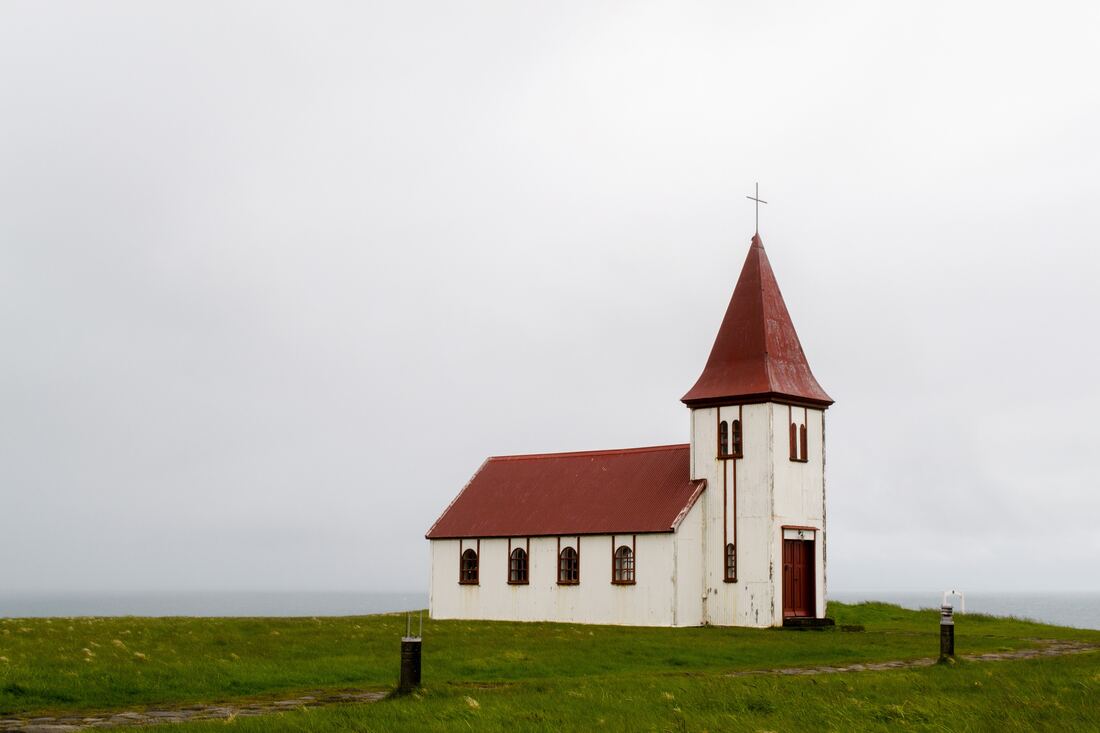 Photo by Soff Garavano Puw on Unsplash
As we look out at the landscape of the American religious culture, there is nearly a church on every corner. According to a National Congregational Study conducted in 2020, there are approximately 380,000 churches in the United States. With a U.S. population of about 331.9 million people, that means there is approximately one church for every 870 people or roughly 7,600 churches in each state. Yet, according to a report by NPR news (2023), the average size of the American congregation is roughly 65 members. This is probably surprising to many as we drive by so many churches that all seem medium-to-huge or the pastors we follow on the internet or through podcasts all seem to shepherd medium-to-large churches. What this means is that most of the 380,000 churches are hidden and out of sight, tucked away in a small neighborhood or they are meeting inside a gymnasium or a school auditorium.  Photo by Mantas Hesthaven on Unsplash In this postmodern, humanist, and theologically liberal western culture, there is a great misunderstanding regarding the gospel. It’s a word we have become all too familiar with, to the extent that we toss it around, use it in everyday lingo, hear it in songs on the radio, in Christian movies, Sunday messages, and mid-week studies. We hear people talk about having “gospel conversations” with their friends and neighbors, and yet, as we listen to the content of these gospel conversations, we begin to realize that what is meant is that they talked about God and religion on a high level. They mentioned Jesus, church, and the Bible—the core elements of the gospel (not).
All of this is indicative that many Christians fail to accurately understand the gospel. Even more so, many Christians struggle to explain the gospel in any meaningful and intelligible sense. This has led to churches being filled with people who say they are Christian, who profess to believe the gospel, but are no more saved than Cain or Judas. Over the years, this has become painfully evident to me as I have had the opportunity to interview individuals for church membership and ask them the question: “Please explain the gospel in your own words?” Over the years, I have had several people sit before me, who grew up in church or at least have been in church for many years prior, struggle with that question. At worst, a few entirely missed the mark. At best, most presented a truncated view of the gospel. |
Past Articles
April 2024
|
 RSS Feed